• How We Do It

    How We Do It

    Lorem ipsum dolor sit amet, consectetur adipiscing elit. Mauris sit amet nisl lectus, id sagittis metus.

  • Easy to Customize

    Easy to Customize

    Nunc sapien risus, molestie sit amet pretium a, rutrum a velit. Duis non mattis velit. In tempus suscipit sem, et consectetur.

  • Clean Design

    Clean Design

    Class aptent taciti sociosqu ad litora torquent per conubia nostra, per inceptos himenaeos. Nam consequat risus et lectus aliquet egestas.

  • Works Everywhere

    Works Everywhere

    Nullam a massa ac arcu accumsan posuere. Donec vel nibh sit amet metus blandit rhoncus et vitae ipsum.

  • Web Development

    Web Development

    Suspendisse eleifend nulla in est euismod scelerisque. Etiam lacinia fermentum nunc id imperdiet.

  • Color Picker

    Color Picker

    Nullam tortor tellus, iaculis eu hendrerit ut, tincidunt et lorem. Etiam eleifend blandit orci.

Sourav Ganguly as Team India's coach - the pros and cons

0 comments
When Zimbabwean-born Duncan Fletcher was appointed as the coach of Team India on April 27, 2011, on a two-year contract, he had a reputation to live up to. In his eight-year stint as the coach of England team, Fletcher had helped the team scale quite a few peaks. From 1999 to 2007, under Fletcher’s able guidance, the English team achieved series wins away from home in Sri Lanka, Pakistan, the West Indies, and South Africa. The English team also recorded, during this period, eight consecutive wins —  three of them coming against New Zealand, four against the West Indies, and one against South Africa. Fletcher’s crowning glory as the coach, however, was the 2005 Ashes win when England beat Australia 2-1 in the five-match Test series to lift the Ashes after an 18-year wait — an achievement that brought Fletcher an Order of the British Empire (OBE) and a speedy review and approval of his application for British citizenship by the British Home Secretary.

Besides Fletcher’s impressive work as the coach of England team, what may have helped him clinch the Team India contract was the outgoing coach Gary Kirsten’s word in Fletcher’s favour. When Kirsten ended his four-year stint as the coach of Team India, he was leaving behind a team that was in a better shape than it had been when he inherited it. Though India won, during Kirsten’s tenure, a home series against Australia, away series against Sri Lanka and New Zealand (which came after 40 years), and above all the 2011 World Cup, besides achieving No 1 ranking in Tests and No 2 in ODIs, Kirsten’s contribution as coach should not be measured just in terms of percentage of wins and losses. Kirsten was credited with moulding the team into a fighting unit and establishing camaraderie in the team, besides helping the Indian cricketers improve their technique and overall performance. A happy MS Dhoni would go on record then to tell that Kirsten was “the best thing to happen to Indian cricket.”

To cut a long story short, when Fletcher assumed charge as the coach of Team India, all that he had to do was to live up to his reputation as the successful coach of England and build on the good work that his predecessor Kirsten had done with Team India — an ideal setting for an ideal coach. But that was not to be.

Now, more than a year and a half into his tenure as coach of India, Fletcher does not have much to show in terms of achievements. Under his stewardship, India has till now played 20 Tests, won six, lost 10, and drawn four. Of the 37 ODIs and 17 T20s that the team played during the corresponding period, it won 21 and nine respectively. However, more than the results, it is the dismal state of affairs in the team during Fletcher’s tenure that has brought him much opprobrium. Fletcher is seen as too old (64 years) to inspire confidence and as lacking the confidence and goodwill enjoyed by Kirsten and John Wright before him.

To be fair to Fletcher, coaching Team India is not a cinch. The sheer load of the expectations and the diverse pressure would weigh down even the best in the business. Given the average Indian cricket fans’ predisposition to expect instant results and penchant for idolising players, and the Indian cricket board’s avariciousness and tendency to play to the gallery, a coach has to perform a trapeze act while taking enough care not to step on the over-sized toes. That the batting mainstays of India, Rahul Dravid and VVS Laxman, retired during Fletcher’s tenure leaving a void in the batting lineup has not helped Fletcher’s case either.

However, the BCCI is not going to take such a pragmatic view of things when Fletcher’s contract comes up for renewal in about three months from now. In all likelihood, Fletcher will be made the scapegoat and shown the door, and when that happens, not many will shed tears for a coach who lay low in a high-profile job.


Fletcher’s potential successor

That brings us to the question as to who should be appointed as the next coach of Team India. Already names are being bandied about, the prominent one being that of a former India captain — Sourav Ganguly.

Ganguly was easily one of the most successful and respected cricket captains of India. He was made captain when Indian cricket had hit the rock bottom mired in match-fixing scandals, and he justified the faith that the board and the selectors had reposed in him. Ganguly’s reputation as a go-getter, his in-your-face aggression, and his ability to recognise and nurture talent and get the best out of his players easily make him best suited for the role of Team India coach.

While the man in question Ganguly himself was evasive in his reply to the question whether he wants to be made the coach (“I wouldn’t say that I would not want to coach the Indian team, but currently, I haven’t given it much thought. Also, I don’t believe in thinking too far ahead. Taking things as it comes is how I like to live my life. You never know what lies in store in the future, so why think so much?”), the fact remains that Ganguly is someone who relishes challenges and would not be averse to the idea of taking on the mantle.

However, even if Ganguly throws his hat in the ring, it is anybody’s guess whether the Board of Control for Cricket in India (BCCI) mandarins would be enthusiastic about the idea. While Ganguly as coach can certainly help Team India rediscover its form with his no-nonsense approach, what may go against him is his past reputation for speaking his mind. If anything, Ganguly’s penchant for confrontations, his eagerness to wear his aggression on his sleeves, and his competitiveness that borders on brinkmanship might not make him BCCI’s natural choice for the position of team coach.

(Venkatesan Iyengar was a speedster who could swing the ball both ways. He captained his school team at the zonal and district levels. His boyhood dream was to open the bowling for Team India in the august company of his idol Kapil Dev. Even today the sight of Kapil makes him nostalgic)


Read more
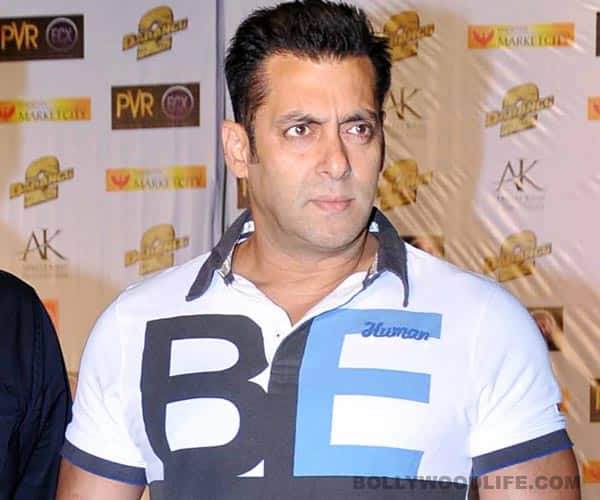
Salman Khan: If a girl says ‘no’, it means NO!

0 comments

The Dabangg 2 superstar comes clean for the first time about his Tere Naam chacrater and how he feels men should behave

Salman Khan’s role as the jilted lover Radhe in the 2003 mega-hit Tere Naam may have worked towards earning the superstar legions of fans across the nation. But now Salman himself is quite not-pleased with the role, he says, as he looks back
In a recent interaction on a TV show, Salman reflected on his past roles, and said that it was his character in Tere Naam that he was most scared of, because it was so negative . The superstar said that he had been afraid of playing Radhe, because the long-haired thwarted lover was a loser who didn’t know how to move on with his life, and how to behave correctly with women. Salman also went on to say that men should not emulate Radhe, as the character didn’t know any better. “When a girl says ‘no’, she means NO and guys should respect that. Radhe didn’t know any better and I am scared of that role. I want guys to emulate his hairstyle, his looks, and his physique, but not his nature, because he is a loser who doesn’t know how to move on.”
Well, Salman sure has come of age, and in today’s times, with crimes against women reaching new levels of depravity, the Tiger’s opinion matters a great deal. After all, the superstar has millions of fans who follow his behaviour carefully and diligently. Good timing, Salman! We like the new, socially conscious side to you….a lot!


Read more

Blood tests: Understanding the basics

0 comments
 
Blood plays a vital role in keeping us alive, hale and hearty. It supplies nutrients and oxygen to various organs, muscles and tissues and transports waste products and carbon dioxide away from them. Blood pressure is considered one of the ‘vital signs’ from a physiological angle and blood tests (however gory they maybe) can provide tons of important information about your health and well-being.
Before understanding why blood tests are done, it is important to know about its different components. An increase/decrease in number/volume, change in their shape or size can indicate abnormalities:
Red Blood Cells (RBCs or erythrocytes) are the most abundant cells in blood. They contain haemoglobin, an iron-containing protein, which is responsible for oxygen transportation around the body.
White Blood Cells (WBCs or Leukocytes) form part of the body’s immune system and help defend the body against infection. They are characterized as granulocytes or agranulocytes. There are three types of granulocytes – Neutrophils, Eosinophil and Basophils and two types of agranulocytes – Monocytes and Lymphocytes.
Platelets (Thrombocytes) are cells that help the blood to clot (thicken) when you cut yourself
Plasma - constitute 55% of blood fluid and contains proteins, glucose, mineral ions, hormones, carbon dioxide, platelets and blood cells. Plasma proteins also help blood to clot.
Blood tests form the fulcrum of diagnosis in modern medicine. A sample of blood from your vein can help doctors
  • Assess general state of your health
  • Determine whether you have certain diseases and conditions
  • Check the function of organs like liver and kidney
  • Identify risk factors for heart disease
  • Check whether medicines taken are working
  • Grow the infectious organisms (causing an illness) on blood samples and identify them through a microscope
  • Obtain DNA sample for genetic testing
How does a blood test work?
During a blood test, a small amount of blood is taken from your body, usually from a vein in your arm or rarely from an artery in your wrist, using a needle. A finger prick may also be used.
First a tight band (tourniquet) is tied around the upper arm to make the vein prominent. The site of the injection is wiped with an antiseptic wipe. A needle attached to a syringe or to a special blood collecting container is pricked into the vein. The syringe is used to draw out a sample of your blood. When the necessary amount of blood has been taken, the needle is removed. Pressure is applied for a few minutes to site of injection on your skin using a cotton pad to stop the bleeding. A plaster may be put keep it clean and prevent infection. The blood sample will be put into a bottle labelled with your name and sent to a laboratory to be examined under a microscope or tested with chemicals.
Are there any risks involved with blood tests?
Blood tests have few risks. Only a small amount of blood is taken during a blood test, so you will not feel ill from the loss of blood. There may be minor complications which subside shortly after the tests are done.
  • If you are very sensitive to needles and the sight of your own blood, you may feel dizzy when a blood sample is taken. This can be reduced by sitting or lying down while the sample is taken.
  • After a blood test, you may have a small bruised area on your skin where the needle was inserted. Bruises are the result of bleeding under the skin. They can be painful but are harmless and they are most commonly caused by lack of pressure at the site of the needle prick till the bleeding has stopped or a blood vessel being damaged by the needle during its insertion
  • If you develop redness or swelling (inflammation) at the site, you may have an infection. Consult your doctor.
  • There is a risk of getting HIV/AIDS, Hepatitis B or C  if a contaminated needle is used during a blood test. Make sure a new syringe is being used when you have your blood taken for tests.


Read more

India vs Pakistan 2012-13: Pakistan humiliate India by 85 runs to seal series

0 comments

An insipid India slumped to yet another series defeat with a pathetic display as arch-rivals Pakistan thrashed the hosts by 85 runs in the second cricket one-day match to take an unassailable 2-0 lead in the three-match series on Thursday.

Riding on opener Nasir Jamshed's second consecutive century, Pakistan posted 250 all out and then shot out the Indians for a paltry 165 to record a convincing victory with two overs to spare at the Eden Gardens in the east Indian city Kolkata.

It was yet another woeful display by the famed Indian batting line-up, which has been struggling for sometime now and has been largely responsible for the team's forgettable results in recent times.

The huge defeat to the arch-rivals will now raise questions on the future of some of India's under-performing batting stars, who have let the team down more often than not.

Jamshed (106) notched up his third ODI century, all three coming against India, but Pakistan suffered a dramatic collapse after being at a healthy 141 for no loss at the mid-way stage. Mohammed Hafeez was the other contributor with a rollicking 76 off 74 balls.

The floodgates opened up after the dismissal of Hafeez as none of the other batsmen could hang around for long on a slow Eden Garden track, which made stroke-making difficult after the ball became older.

The Indians needed a good start from their struggling openers -- Gautam Gambhir and Virender Sehwag -- but it did not materialise yet again, putting pressure on the jittery middle-order.

Sehwag (31), Gambhir (11), Virat Kohli (6), Yuvraj Singh (9) and Suresh Raina (18) perished in quick succession to give the visitors the upper hand in what eventually turned out to be a lop-sided contest.

Skipper Dhoni, who scored a heroic unbeaten 113 in the first ODI in Chennai, again provided some resistance with a cautious and unbeaten 54 but wickets kept tumbling at the other end to nullify his efforts.

The series defeat against Pakistan marks another low for the struggling team which suffered an embarrassing Test series debacle against England at home and levelled a T20 series 1-1.

This defeat has also rendered the third and final ODI to be held at Ferozshah Kotla stadium in Delhi on Sunday inconsequential.

Brief Scores: Pakistan 250 all-out in 48.3 overs (Nasir Jamshed 103, Mohammad Hafeez 76; Ravindra Jadeja 3 for 41, Ishant Sharma 3 for 34) bt India 165 all-out in 48 overs (MS Dhoni 54* Virender Sehwag 31, Saeed Ajmal 3 for 20, Junaid Khan 3 for 39, Umar Gul 2 for 24) by 85 runs.

Man of the Match: Nasir Jamshed


Read more

BollywoodLife Awards 2012: Shahrukh Khan’s kiss with Katrina Kaif is the best of the year!

0 comments

However awkward and cold, SRK and Katrina Kaif’s onscreen lip-lock wins the best pappi of the year title!

Let’s face it! This result could be taken as an indicator of one of the following possibilities – either we Indians don’t know what a perfect kiss is all about (no, we are not getting into intimate details of the act) or, probably, we like everything that Shahrukh Khan does, even if King Khan does the job (read kissing) sans passion!
SRK and Katrina’s kiss from Yash Chopra’s romantic saga Jab Tak Hai Jaan has been voted the best pappi of 2012. Even our kissie master Emraan Hashmi has been beaten! We thought that the sizzling kiss between Bipasha Basu and Hashmi from Raaz 3 (which bagged a lowly 9 percent) or the passionate smooch between Arjun Kapoor and Parineeti Chopra in Ishaqzaade (a mere 11 percent) was quite impressive, but people have given a maximum number of votes (a whopping 70 percent) to SRK and Kat’s thanda smooch.
The other B-town stars will have to sign up for a crash course on how-to-lock-your-lips-perfectly from King Khan to emerge victorious and, above all, to clinch the oh-so-desirable BL award next year!


Read more

New Year special: Dhoom:3, Krrish 3, Chennai Express – Which are the biggest Bollywood releases of 2013?

0 comments

While 2012 witnessed major blockbusters that redefined success and created new records at the box office, 2013 is expected to follow suit, already showing off a mixed bag of sequels and distinctly original stories

With the passing of 2012, the dawn heralds the arrival of a new year. Apna Bollywood is also gearing up to venture into newer horizons and established as well as young filmmakers are all set to unleash new plots, fresh faces and never-seen-before pairings in their promising dream projects, be it Hrithik Roshan’s superhero sequel Krrish 3, Aamir Khan’s negative portrayal in Dhoom:3, Shahrukh Khan’s rom-com Chennai Express. BollywoodLife brings you an impressive lineup of the most eagerly awaited films that are likely to set the cash registers ringing in 2013….


Read more

Steely Dhoni Proves His Mettle

0 comments
Even though the last three of India’s T20s went down to the wire and landed in almost last-ball defeats for India, Sunday’s defeat in the first One-Day International (ODI) against Pakistan will not hurt the Indian fan that much. There was dignity in that defeat, inspite of an inexplicable top-order collapse.

All this because of a monstrous effort from captain Mahendra Singh Dhoni, who was ably supported by Suresh Raina and Ravichandran Ashwin in the batting and later by Bhuvneshwar Kumar, Ishant Sharma and Ashok Dinda in the bowling. The determination and application that Dhoni and Raina showed when India was reeling at 29 for five after 10 overs and the intensity with which Dhoni crafted his entire innings made him the deserved Man of the Match, in spite of being on the losing side and Nasir Jamshed getting a century.  This is one award that Dhoni is going to cherish for a long time, simply because it brought the best out of him when he was under seige.

Conditions were not ideal for Dhoni when he arrived at the crease. Overcast conditions, a green pitch, moisture and the Indian batting’s poor technique had opened the floodgates for an inexperienced opening combo of Junaid Khan and Mohammad Irfan (who have played a combined 15 ODIs). They were hitting the timber as regularly as Pakistan is churning out fast bowlers. So, Dhoni had to stabilise the ship at first, take singles rather than counter attack. He scored his first 50 off 86 balls with just two hits to the fence – a very cautious approach indeed.

Humid conditions got the better of Dhoni physically and he was fighting cramps by taking lots of fluids and a breaks. Rarely does one see Dhoni gasping for breath and missing runs. However, Dhoni was mentally strong as steel. He was conserving his energy for the big shots. He knew he had to give his weak bowling attack a fighting total and boy did he show his class. Helicopter shots and brute power amidst sapping energy, a treat to watch; the next 63 came off just 39 balls.

Dhoni’s innings reminded one of a Spartan warrior. In 480 BC, 300 Spartans warriors fought the invading Persian Army led by King Xerxes in the Battle of Thermopylae. Vastly outnumbered, these Spartans, held back the enemy in one of the most famous last stands of history. Eventually all the 300 Spartans died fighting 100,000 strong army, but they held fort for three whole days. History only remembers the spirit and the tenacity of these 300 Spartans led by King Leonidas. Dhoni’s effort will be remembered likewise.

After such an intenese effort, one doesn’t feel bad when the team ends up on the losing side. There is a winner in every loser, for it is in losing that one learns to win. When intent is weak, we are always in our comfort zones. But when intent is strong we create an unbelievable mechanism. The intent and intensity of Dhoni was unmistakably very strong.

After the World Cup win, the Indian team has shown weak intent and little intensity, barring one or two players. How often has the opening pair of Sehwag and Gambhir walked the talk? How many chances does Rohit Sharma need to prove his outrageous talent? How long are the selectors going to confine deserving talent to the benches? Where is the new bowling talent - pace or spin? If bowling is the weak link, why do they still persist with seven batsmen? How often has the bowling been exposed? In fact, it suddenly seems almost impossible to win bowling second.

These are questions that the selectors will have to answer. You can’t blame the captain. A captain is only as good as his team. The pressure must be on the selectors. Spending sleepless nights finding the right answers, travelling far and wide all over the country searching for talent in a country that eats, sleeps and breathes cricket,taking bold steps and decisions, making current performance and not past records as the selection criteria,making players earn their spot in the team not take it for granted – that is their job.
You can avoid reality, but you cannot avoid the consequences of avoiding reality. We are already experiencing the consequences. If Indian cricket prospers, the Indian economy is on a high — it’s proven.

The Indian cricket fan is not going to sit quiet now. The Indian revolution has started whether - it’s Anna Hazare’s fight againt corruption or the Delhi gangrape victim’s lesson for safety of women. It’s time for Indian cricket to revolt as well, because it really hurts the fans to see India lose and lose without a fight. The media and the internet have been the biggest allies in this fight for right, so let’s take advantage of it.

The future depends on what we do today. With the dawn of 2013, let us Indian fans make the selectors accountable in 2013 and make some of the above-mentioned questions answerable. It’s only for the betterment of Indian cricket.

(Rajesh K Shah, an entrepreneur and a passionate marathoner, hails from a distinguished family of musicians; he is the son of Kalyanji of Kalyanji-Anandji fame. Cricket has been his abiding other passion since childhood)


Read more