• How We Do It

    How We Do It

    Lorem ipsum dolor sit amet, consectetur adipiscing elit. Mauris sit amet nisl lectus, id sagittis metus.

  • Easy to Customize

    Easy to Customize

    Nunc sapien risus, molestie sit amet pretium a, rutrum a velit. Duis non mattis velit. In tempus suscipit sem, et consectetur.

  • Clean Design

    Clean Design

    Class aptent taciti sociosqu ad litora torquent per conubia nostra, per inceptos himenaeos. Nam consequat risus et lectus aliquet egestas.

  • Works Everywhere

    Works Everywhere

    Nullam a massa ac arcu accumsan posuere. Donec vel nibh sit amet metus blandit rhoncus et vitae ipsum.

  • Web Development

    Web Development

    Suspendisse eleifend nulla in est euismod scelerisque. Etiam lacinia fermentum nunc id imperdiet.

  • Color Picker

    Color Picker

    Nullam tortor tellus, iaculis eu hendrerit ut, tincidunt et lorem. Etiam eleifend blandit orci.

Showing posts with label Education. Show all posts

4 advantages of distance learning MBA

0 comments
A distance MBA is becoming a popular choice among students and working professionals. For those of you who are considering taking up a MBA by distance learning, we list some of the advantages: 4 advantages of distance learning MBA 
Earn and learn
Flexibility is the biggest advantage of distance learning MBA course. This is true especially if you are a working professional. You can earn and learn at the same time which is impossible in a full time MBA course.

Save time and money
You save on time and money on commuting or shifting to another city when it comes to distance MBA. For instance, if you are from Delhi, you can pursue a distance learning course that is available in Pune.

Study at your own pace
Everyone has their own style of learning. Some students pick up things faster than others. So, you can study at a pace that is comfortable for you which is another plus point of distance learning MBA.

Accessibility
You can access the study material online whenever you want to as well as pick up any topic that you find it easier within the course material.

-Arti Vadnerkar


Read more

Choosing a right coaching centre

0 comments
Choosing a coaching centre is an important decision for all students. Before you spend money on a course, it is important to select a coaching centre that best suits your needs, time and budget. Here are three questions to ask yourself:

How far is the centre from my house?
Three questions to ask when choosing a coaching centreIt's important to make sure that your coaching centre is close to your home. Most coaching centres have multiple branches to ensure that students do not have to travel much to reach.

How qualified is the faculty?
The most important thing for you is to find out whether the faculty of the coaching class is good for you. So get to know about the faculty from the current and previous batches.

Tip: See if you can go for a demo lectures or get feedback from previous batches.


Is the study material easy to understand?
Every coaching institute or tuition class will provide you with basic study material. You need to decide if it is easy to understand. The type of study material will help you to judge the centre’s abilities.


Read more

Placements: Only 10% of B-school graduates get hired

0 comments
A study has revealed that only 10% of B-school graduates get hired. The Assocham study reveals that only graduates from top B- schools like Indian Institutes of Management (IIMs), get placed. The survey also disclosed that merely 10% of graduates from other b-schools get hired.
 The reasons for not recruiting include lack of quality and skills for recruitment. Industry spokespeople were quoted as saying that students from lesser-known institutes did not possess the required skills for jobs offered.
Apparently 180 B-schools had to shut down due to lack of infrastructure, lack of quality in faculty and did not meet the industry's demands.
B-Schools had to shut down in Delhi, NCR, Mumbai, Bangalore and Kolkata.
For a list of B-schools across India click here


Read more

INTERVIEW: Study tips to crack GMAT

0 comments
INTERVIEW: Study tips to crack GMATMihika Yadav scored 690 in her GMAT.  She is now studying PGP at IIM Indore. Mihika shares her study tips with us...

Tell us about yourself? Which course are you pursuing at IIM?
I am an accessory designer and currently pursuing a 2 year full time PGP course from IIM I.
Being trained from NIFT, Creativity is an integral part of my persona. I have always had an inclination towards fashion and dream to build my own Global Fashion retail chain. To fulfil my entrepreneurial dream I have chalked out a career path for myself, which entailed gaining requisite knowledge and experience. I realized to build a brand along with creativity one needs to have business acumen too. And thus, I decided to do an MBA course..

How did you prepare for GMAT?
Having decided to do MBA I started preparing for GMAT. I took a 2 month sabbatical from my job. I started with brushing up basics of quant and verbal through Official Guides.
For verbal I referred to Manhattan Sentence correction and Powerscore Critical reasoning. Quant is fairly easy for Indians and one should focus on solving faster the easier questions rather than cracking hard questions and wasting a lot of time.
As far as IR is concerned one should not fret about it as it is just a warm exercise before you hit the real goal. Though it is widely known but I still want to emphasis on the fact that in any case do not leave the last questions unanswered. There is a huge penalty for it.
Another tip I would like to share is that when you are running short of time and you have to trade off between time and accuracy try the “alternate correct answer” style.
It is self developed style but works wonders. Say you just have 5 minutes and 10 questions to solve. Our tendency is to solve the first 5 questions accurately and then for last 5 just mark randomly. Instead solve alternatevly one accurately and next random guess. This way you don’t end up 5 consecutive wrong questions which again fetch huge penalty.


 *Thanks to India.com


Read more

Pediatrician as a career

0 comments
Pediatricians can be general or specialized and the importance Pediatrics in medical science has increased, over the years.

Who is a pediatrician?
Pediatricians take care of children, diagnose and treat infections, injuries, and many types of organic disease and dysfunction, child checkups and giving them their shots.
There are also pediatricians who practice primary care, taking care of the general needs of children. There are others who specialize, for example, only treating kids with cancer, heart problems, kidney problems, etc.

Who can be a pediatrician?
You need to have Doctor of Medicine (MD) in Pediatrics after completing Bachelor of Medicine and Bachelor of Surgery (MBBS). There is a separate entrance exam in order to complete this course.

Would a career as a pediatrician suit you?
Pediatricians must really like working with children and their families. Excellent communication skills, the ability to work in a team, listening skills, patience, time management, having compassion and a good sense of humour are some of the most important skills.

What are the job prospects?
As a pediatrician, you can do a private practice; work at hospitals, health care organizations, faculty member at medical college or center, private clinics and so on.

How much can you earn?
Pediatricians can earn high salary from the private sector organizations as compared to the public sector organizations.
Salary ranges will increase with the experience in the concerned field. Fresher can earn up to Rs 30k per month depending upon the sector.


Read more

COLLEGES Articles Answers Rate your college Coaching centres NIT students can now graduate from IIT

0 comments
NIT students can now graduate from IITNow NIT students can study at IIT. The board of IIT directors has decided to permit National Institute of Technology (NIT) students to complete their final year in an IIT.
A meeting will be held on January 7, the proposal will be placed before the meeting of the Standing Committee which will be headed by HRD minister M M Pallam Raju.
 It is expected that this move will be beneficial as it will utilize the IIT resources optimally and IITs will be able to attract better students and groom them for their PhD programme.
The suggestion is made by the Anil Kakodkar committee in its April 2011 report titled 'Taking IITs to Excellence and Greater Relevance'.
The IITs will admit the NIT students on the basis of their performance in first three years of their engineering, look at recommendations from their teachers. The research potential of the students will be assessed through an interview.


Read more

IIIT: New campus inaugrated by Sheila Dikshit

0 comments
IIIT:  New campus inaugrated by Sheila DikshitDelhi Chief Minister Sheila Dikshit inaugurated the campus of Indraprastha Institute Of Information Technology (IIIT) which till now was functioning from Netaji Subhas Institute of Technology.
The newly-constructed campus is located in Okhla area in south Delhi.
The institute was set up in 2008 but was operating from the campus of Netaji Subhas Institute of Technology in west Delhi's Dwarka.
"The government is keen to develop this institute as the world's best institute in IT and allied fields by offering highly innovative courses," Dikshit said.
She also announced construction of an iconic foot over-bridge to connect the IIIT campus with Okhla Metro Station.
The chief minister expressed the hope that the present number of seats in the institute 560 would double in three years.


Read more

IIT-Bombay: PhD Admissions end on Oct 30

0 comments
IIT-Bombay: PhD Admissions end on Oct 30Indian Institute of Technology (IIT), Bombay has applied for admission to Doctor of Philosophy program for the commencing session 2013.

Eligibility:
First   class   or   60%   marks     (55%   marks   for   SC/ST)   in     Master’s   

Degree in Engineering / Technology or equivalent

For Humanities and Social Sciences Department : 55%  marks (50% for SC/ST) in Master’s Degree in Arts/ Social  Sciences or equivalent

A  First class or 60% marks (55%  marks for SC/ST)* Master’s degree in Science or a first class or 60% marks (55% marks for SC/ST)* in Bachelor’s degree in Engineering/Technology.   

Candidates   meeting   this   requirement must   also   fulfill   one   of   the following additional requirements:

Valid Gate Score
CSIR /UGC / NBHM / DBT / DS, Inspire Award or Fellowship.

Minimum of 2 years of professional work experience (for SW/SF/ IS category)

Minimum 6 months project   work experience in  IIT Bombay (for PS category)


Read more

What they do not teach you at IIMs ?

0 comments
We are not going to focus on what you will learn at the IIMs. The course is one of the best. The qualification you will receive will be valued by employers across the world. Instead, let’s talk about what you will not learn.

1. You need support to succeed
 Although b-schools include group assignments and projects, you will not be appraised on your results but also on your team’s performance. You will need to work with people from different departments with different personalities to achieve your goal.

2. You will not be a CEO after graduating
 You are not going to graduate from the IIMs and become a CEO unless you establish your own company or are fortunate enough to have a family business.

 3. You need to work with different types of people
 An MBA is more than the mathematics and VA that you studied for CAT. Too many students make the mistake of focusing only on cracking CAT and not enough on the qualification.
Skills such as listening, empathy, leadership, the ability to work with different types of people are now considered just as valuable.

4. You don’t know everything
A PGDM from the IIMs does not mean that you know everything. Learning is a continuous process which does not stop. Successful people have two skills that set them apart from the rest – the ability to listen and learn.

5. If money is your motivation, then look elsewhere
If your only reason to go to the IIMs was to get a plum job, you will not succeed. Waking up to go to work every morning for the next 40 years of your life requires more motivation than the salary you will draw.
 
You may want to see courses in distance MBA programsExplore MBA colleges in India


Read more

TISS entrance exam 2013

0 comments
TISS entrance exam 2013The entrance exam of Tata Institute of Social Sciences will be held on January 13. Interested candidates can apply online for TISS NET or send the printed application form to the Mumbai campus. The last date for receipt of application forms is November 10, 2012.
The Tata Institute of Social Sciences (TISS) was established in 1936, as the Sir Dorabji Tata Graduate School of Social Work. The first school of social work in India, TISS was a pioneering effort with the objective of Social Welfare through academic excellence, a characteristic of the Sir Dorabji Tata Trust (SDTT).
The admissions have begun for full-time postgraduate degree programs in Mumbai, Tuljapur, Guwahati, and Hyderabad campuses on January 13.
Students can choose between the online and paper format.
TISS may also conduct the paper in a single entrance exam format for all the candidates rather than two-paper format.
TISS has invited applications for 39 highly competitive, M.A/M.Sc/M.P.H/M.H.A Programmes in inter and trans-disciplinary areas of Social work, Health, Management, Development, Habitat and Climate Sciences.

Image courtesy: photos.com

Are you confused about career? Speak to counsellor Prerna Prasad for career advise


Read more

AMU Campus Placements

0 comments
AMU campus placementsTata Consultancy Services (TCS), among the top 10 IT firms in the world, has recruited a record 144 students from the Aligarh Muslim University campus, a statement said Saturday.
The TCS recruitment team was in the AMU campus Oct 10-12. A total of 222 students were shortlisted for interviews, of which 144 with B.Tech, M.Tech and MCA degrees were finally selected after a rigorous process, the statement added.
AMU pro-vice chancellor Syed Ahmad Ali thanked the TCS for their visit and emphasized on strengthening the relationship with them.
At Indian Institute of Technology (IIT-M) the pay packages as well as the companies recruiting have increased.

Copyright:IANS

Image courtesy:photos.com

Have queries regarding engineering placements, talk to IIT-B graduate Bhavik Shah

Which engineering course is right for you? Go through our list of institutes here


Read more

Is University worth it? - Jamie Dunn

0 comments
Why can’t graduates get jobs?

Are there so many unemployed graduates because of the lack of jobs, or is it
because they aren’t equip properly for the world of work?

It’s a strange state of affairs when young people are paying £9,000 to get
higher educated, but then coming into a market-place where there are no job
opportunities. From an employer’s point of view, I think that these graduates
miss the vital part of the educational puzzle, experience. Education is geared
towards the theoretical side of learning, but employers want to see that there is
more to the individual than just a bunch of pass papers.
From a young person’s view, how can graduates gain experience when
employers aren’t prepared to offer them the opportunity to?
I think that the solution can be found at different levels, Universities need to start
incorporating more experiential learning and encouraging the students to go out
and seek opportunities rather than to rely on the qualification to do all the work
for them. It would be great to see Universities place more focus upon introducing
students to employers on a simple, friendly networking level. It’s a real cliché,
but as the old saying proceeds, it’s sometimes who you know, not what you
know.
Students should be prepared to volunteer and show employers that they are
worth employing based upon the experience that they have learned about
the business whilst in the volunteering stage. This is also a great opportunity
to show off your skills whilst in a real, practical environment and show some
results that will impact the organization that you are currently volunteering
with.
Businesses can start working with graduates more whilst they are still studying
and start equipping them with the skills that they need upon graduating because
then that way businesses have the chance to hand pick the best talent and start
training them for their organization before they even finish University.

This situation can get better and it will get better if each industry starts
speaking to each other and communicating because at the end of the day, it’s in
everybody’s interests to do so.


- Jamie Dunn (www.jamie-dunn.com)
  Entrepreneur | International Speaker | Coulumnist


Read more

IIM-Indore: Two-year PGP course launched in Mumbai

0 comments
IIM-Indore: Two-year PGP course launched in MumbaiIndian Institute of Management (IIM) Indore has launched its flagship post graduate programme in management (PGP) in Mumbai.
The two-year PGP is covered in six terms.  
The programme aims to groom participants into competent professional managers with a capacity to learn and adapt to national and international environment.
About IIM-Indore
Established in 1996, Indian Institute of Management Indore is the sixth in the prestigious IIM family of management schools. The institute was chosen to be set up in Indore to give an impetus to management education in central India and has ever since been acting as the pioneer in the field of management, interfacing with the industry, government sectors and PSUs.
The essence of management, IIM I believes, lies in managing one's own ambitions and forging ahead consciously. "A strong theoretical foundation is the basis of good corporate practice" this, coupled with a grounding in management as it is practiced, is the underlying theme of the flagship Post Graduate Programme (PGP). Spanning two years the programme is benchmarked against similar programmes of the best business schools in the world. Experiential learning, IT orientation, and social sensitivity are some of the unique features of the programme.

You can explore management colleges in India here


Read more

Interview: Journalism as a career

0 comments
Sarwar Borah, a Delhi based journalist, tells us about journalism as a career.

Describe a day at the office for you.

The day begins with an editorial meeting, that lays out the day's plan. Since desk work is all about correcting and structuring stories, we just cannot completely rely on the reporter's information, we need to keep an eye on agency news to ensure that the report which gets published is correct and updated.

What were your roles and responsibilities as a fresher?

To write feature articles and generally assist in all the editorial work.
What degree did you do? How did that help you in your job? And what are the starting salaries in this field like?
I have done a B A Psychology and M A in Journalism through correspondence. In print media its your urge to learn and command over the language that counts. You need professional training to enter electronic media and film production.
The starting salaries are Rs. 15,000 per month.

Any advice you would like to give those who are getting into this line?
It's an adventurous journey. The power to interview celebrities, politicians, policy makers, sportpersons gives you an amazing high. Be honest and true to yourself. 
Sarwar Borah has around six years experience in journalism. He started my career from lifestyle journalism then moved to online writing, followed by a stint in an international newspaper and currently working with a leading national daily.
To explore more journalism colleges click here
Have queries regarding journalism, speak to counsellor Indu Prasad

- Kabir Singh Bhandari


Read more

Happy Teachers Day!!!

0 comments
The best teacher is the one who suggests rather than dogmatizes,
and inspires his listener with the wish to teach himself.”
~ Edward Bulwer-Lytton
 
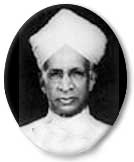
In India 5th September is celebrated as Teaches' Day as a mark of tribute to the contribution made by teachers to the society. 5th September is the birthday of a great teacher Dr. Sarvapalli Radhakrishnan, who was a staunch believer of education, and was the well-known diplomat, scholar, President of India and above all a Teacher.

When Dr. Radhakrishnan became the President of India in 1962, he was approached by some of his students and friends and requested him to allow them to celebrate 5th September, his "Birthday". In reply, Dr.Radhakrishnan said, "Instead of celebrating my birthday separately, it would be my proud privilege  if September 5 is observed as Teachers' Day". The request showed Dr.Radhakrishnan's love for the teaching profession. From then onwards, the day has been observed as Teachers' Day in India.

One of the most celebrated writers in the modern India today his work varies on philosophical, theological, ethical, educational, social and cultural subjects. He contributed numerous articles to different well-known journals, which, are of immense value and seems to surprise various readers because of the depth in the meaning of the articles.

Teachers mold the lives that they influence because the lessons learned from teachers remain with their students throughout life. We should always respect our teachers. Teachers need encouragement and support from the community to feel that their devotion to students is appreciated.
Teachers' Day:
Teachers' Day is now one of the occasions that is looked forward by the teachers and students alike as on this occasion its not only when teachers are praised but also around various schools students dress up as a representation of their teachers and take various lectures that are assigned to the teachers they represent. As the day passes the students perform the regular activities that are performed by the teachers. On this day students realize what it means to be a teacher and what it means to control the future of several students in their classes and also teachers are reminded what it felt like when they were the students.

Apart from the fun aspect of the day it is also a day when one can look back, admire and get inspired by Dr. Radhakrishnan, a small town cunning boy, who grew up to become one of the most respected politicians in the history of democracy of India.


A good teacher is like a candle - it consumes itself to light the way for others.


Read more

Many, many leagues under the sea

0 comments
We have serious concern about the depletion of natural resources available on land. The day may not be far off when our eyes will focus more seriously on the treasures in the oceans. Even today our lives are intertwined with the oceans. The studies on oceans gain more and more importance, as we go forward.
Oceanography is the science of the sea. It deals with the physical, chemical, biological, and geological aspects of oceans. Exploration and exploitation of resources are a part of oceanography. In certain contexts, the terms oceanology or marine science are used synonymously.
Since we get food from the ocean, we are interested in the sea, just as the farmer is interested in the field. We use the oceans for transport. The merchant navy has a vital part to play in national and international trade. We use the ocean for recreation, such as swimming, diving, and boating.
We are concerned about the waves, winds, ocean currents, and temperature changes. The weather, wind, and rainfall on land are dependent on the oceans. We know how the coastal climate differs from the continental climate. Storms, hurricanes, typhoons, tsunami, and even droughts depend on the influence of the oceans. The study of the oceans is a great voyage of discovery.
For the sake of convenience, oceanography is usually divided into different segments.
Physical oceanography: Study of the motions of seawater, particularly waves, currents, and tides. Some of the topics studied are the following. Temperature, salinity and density; influence of the physical state of the oceans on the Earth's climate; ocean warming slowing of ocean circulation; Anthropogenic and biologically active tracers; air-Sea interaction; turbulent and radiative heat {fllig}uxes through the sea surface; phase changes of water; wind-driven circulation in the upper ocean; conservation equations; and transport processes of ocean circulation.

Chemical oceanography (marine chemistry): It is concerned with the study of the dissolved elements in seawater and the chemical and biochemical cycles in the sea. Topics of study include the chemistry of seawater; reactions between the atmosphere and hydrosphere; the origin and evolution of seawater; the origin of the sediment that covers the seafloor; water and sediment sampling; relationships among chemical constituents of seawater; and the influence of changes in geology; and biological activity.
Man-made pollution in the form of dumping of sewage, oil, fuel, agricultural chemicals, and industrial exhaust into the oceans decreases sea-water quality, particularly along the coast. Problems such as the toxic effect of human consumption of mercury-laden fish come under the domain of chemical oceanography. We have to analyse the influence of changes in seawater temperature on global weather. El Nino is a case in point. It is a shift in ocean temperatures and atmospheric conditions in the tropical Pacific that disrupts weather around the world.
Chemical oceanography may have to be subdivided for the sake of convenient study. For instance, marine chemistry is concerned with the composition of seawater. Marine geochemistry is the chemistry of the precipitated rocks and sediment found on the ocean floor. Marine biogeochemistry studies the role of organisms, especially microorganisms in the alteration or formation of geological features in the oceans.
Biological oceanography (marine biology): Study of life in the oceans, includes marine biology and ecology. It deals with the study of the plants and animals of the oceans and their ecological interaction.
Geological Oceanography: Study of the shape and geologic features of the ocean floor.

NIO

The premier research institution in the field of oceanography in India is the National Institute of Oceanography (NIO), Dona Paula, Goa - 403 004; Web: www.nio.org.
NIO, a constituent of the Council of Scientific and Industrial Research, was established in January 1966. It has regional centres in Mumbai, Kochi, and Vishakhapatnam. It has rich infrastructure in terms of a large oceanographic laboratory of international repute and human resource of 200 scientists, with a fine contribution of nearly 5,000 research articles. It operates a coastal research vessel CRV Sagar Sukti, equipped for multidisciplinary oceanographic observations. The institute makes use of the services of the research vessel ORV Sagar Kanya, operated by the Ministry of Earth Sciences.
The major research areas include the four traditional branches of oceanography indicated above. Further, it conducts research and some other areas such as marine instrumentation and archaeology. Several universities use the institute for carrying out doctoral research, guided by NIO scientists. The research studies carried out are not in the form of academic exercises, but they focus on practical applications. Research sponsored by industry is an integral part of the activities in NIO. Oceanographic data collection, environmental impact assessment, modelling for the prediction of environmental impact, marine environmental protection, and coastal zone regulations are being handled.
NIO gives opportunities for nearly 60 Ph.D. research fellows at a time. Also, it offers facilities for project research work for hundreds of graduate and postgraduate students. In other words, the institute is a research hub in several areas of oceanography.

Thrust areas

Some of the areas of focus are indicated below.
Application of geological and geophysical methods in marine archaeology and underwater explorations.
Applications of marine geo-scientific methods to study seabed and sub-seabed geological features.
Biogeochemical and ecosystem responses to global climate change and anthropogenic perturbations, and transfers across interfaces in the north Indian Ocean.
Biominerals from the continental margins and conditions for their formation.
Bioprospecting and biotechnology of marine microorganisms.
Coastal upwelling (upward movement of water along a coast).
Eco-bio-geography of the estuarine and coastal waters.
Engineering analysis of coastal processes for marine structures and technology development.
Environmental impact analyses of mining of marine minerals.
Equatorial Indian Ocean processes on the climate variability.
Evaluation, mechanism and control of biofilm (a thin film of bacteria that adheres to a surface) and biofouling (impairment of something, such as a ship's hull, as a result of the growth of living organisms).
Genesis and occurrence of deep-sea mineral deposits.
Habitat ecology and aquaculture of marine organisms for food and medicine and chemical synthesis of novel compounds.
Impact of natural and anthropogenic pressures on the coastal zone.
Indian climate and phytoplankton variability.
Interaction between ocean, atmosphere and coastal seas.
Marine environmental studies for sustainable development in coastal zones.
Marine pollution assessment and eco-toxicology.
Physical and biogeochemical dynamics of estuarine and coastal ecosystems.
-B.S Warrier


Read more

Entrepreneurship dreams beckon BIM students

0 comments
Students of management are often the closest to realising dreams of setting up a business — simply because their theoretical knowledge in running an organisation is just a spark away from being translated into reality.
Not surprisingly, 70 students belonging to the Entrepreneurship Cell (E-Cell) at the Bharathidasan Institute of Management (BIM) plan to set out on their own business ventures a few years down the line.
“For long, Indians have worked under someone or the other, and the urge to start some venture of their own got suppressed over time. But today, the situation is changing with all the exposure the Internet has brought. This, combined with interactions with successful entrepreneurs who have survived the risk they undertook, can be hugely motivating for students like us,” says Vairava Prakash from the E-Cell.
Based on this premise, the E-Cell was begun just a year ago, with 35 members and subsequently enrolled with the National Entrepreneurship Network. The group regularly organises workshops on business plan development and knowledge camps by inviting practising entrepreneurs and venture capitalists.
Of course, there are hurdles. Said N. Bala Baskar, Director, BIM: “For most students, getting into entrepreneurship immediately after graduation is not an option because of their existing commitments. Family pressures to land a job, their current financial situation and repaying educational loans are some of the prominent reasons.”
He adds: “Difficulty in securing venture capital is another hurdle. Most venture capitalists choose to fund ventures that have been functioning long enough to show promise. An untested business plan cannot find funding easily.”
In fact, the 100 per cent placement record indicates that students are not yet ready to take the plunge straight out of college. “We want to first gain relevant exposure, stabilise ourselves and then raise the capital required to start off on our own,” says V.M. Ramesh, who handles media and public relations for the E-Cell.
Nevertheless, they have started experimenting. Their pet-venture ‘Snack n Bite', is an all-night cafeteria operating within the campus between 10 p.m. and 2 a.m. “We have tied-up with the State Institute of Hotel Management and Catering Technology for our food stocks and the venture was jointly funded by the management and an alumnus. We pay them annual dividends out of the profit we make,” says K. Uma, one of the members handling the initiative. On the cards is another venture, the Green Initiative, begun in collaboration with an alumnus having his own business in selling decorative plants. “We intend to procure decorative plants under a franchisee model and sell them to corporates through an outlet in Chennai,” says Dinesh Chinnasamy, who handles networking and public relations for the cell. Mani V. Shanthavel, one of the founding members of the E-Cell, experimented with entrepreneurship for his summer project.
“The idea arose from my classroom research project that showed 60 per cent of youngsters were willing to read Tamil books, but didn't know which ones had to be read. I then decided to launch a prototype website, www.lemuria.co.in, which not only sold and delivered Tamil books, but also included a user-generated book referral system.”
To address capital-related issues, the E-Cell is planning to set up an Alumni Venture Fund, contributed by the institute's over 2000 alumni. The institute provides them a cushioning by granting a year's placement leave. They are allowed to sit for placements along with their juniors in case their venture fails to take off.
-Aruna V Iyer


Read more

Pursuing innovation year after year

0 comments

The joys of this Panchayat Union Middle School in Katrambakkam village in Kancheepuram district are two-fold. Recently, the project work done by the school's team was shortlisted as one of the 30 projects from the State that would participate in the National Children's Science Congress to be held next month in Jaipur. Besides, the team has also been selected for the Science Congress to be held in Bhubaneshwar. The team of five will exhibit its work on the ‘Effect of underground colony insects on the soil'.
“Many of these ideas that children present at such forums are promising. Encouragement, freedom and some funds are enough for the children to pursue innovation,” says S. Sakthivel, a teacher of the school, who has been guiding the members of the team.
As part of their project, the team comprising students of classes VI to VIII has been collecting soil samples from termite and ant mounds to find their physical properties. “We sent the samples to a laboratory in Kancheepuram,” says the teacher, adding we would continue upgrading the project.
Parents might dread project works given by schools, but experts say it could be the start of innovative thinking if children are given a free hand and allowed to “dirty their hands.”
Also a teacher can bring the much needed difference to inculcate interest in a subject. However, in government and local body-run school, teachers are hesitant to encourage students to participate in such forums because of procedures involved.
Nikita Anil Kumar, a student of IX of Vael's Billabong High International School, who is inspired to study more about quantum theory after reading and watching science fiction, says interest should overcome other challenges. “Also, schools can think of introducing zero hour when students work on project to inculcate innovative thought,” she adds.
To encourage the education system to provide more opportunities for students to innovate and design, the National Council of Educational Research and Training (NCERT) recently constituted a committee to examine creation of a separate stream for National Innovation Scholarships.
The committee will also make recommendations to formulate a scheme at the secondary school level, where selected students would be guided by experts from institutions of higher learning.
While the scholarship will help in nurturing talent, R. Ramanujam, Professor, Institute of Mathematical Sciences and a member of the committee, says the actual challenge is in integrating innovation within a system where pedagogy and curriculum are equally important. Teachers say much of the emphasis should be to orient students through a practical approach while teaching subjects. Experts say that 10 to 17 years of age group is the best time to inculcate scientific temper in students.
The National Children's Science Congress organised by the National Council for Science and Technology Communication (NCSTC) Network, Department of Science and Technology (DST) has students aged between 13 and 15 as its participants.
But, innovation at the school level still has a long way to go, says D.K. Pandey, scientist, DST. “Children need to be encouraged to explore facts beyond the textbook and various stakeholders [parents, teachers and schools] should be part of the change,” he adds.
-Liffy Thomas (The Hindu)


Read more